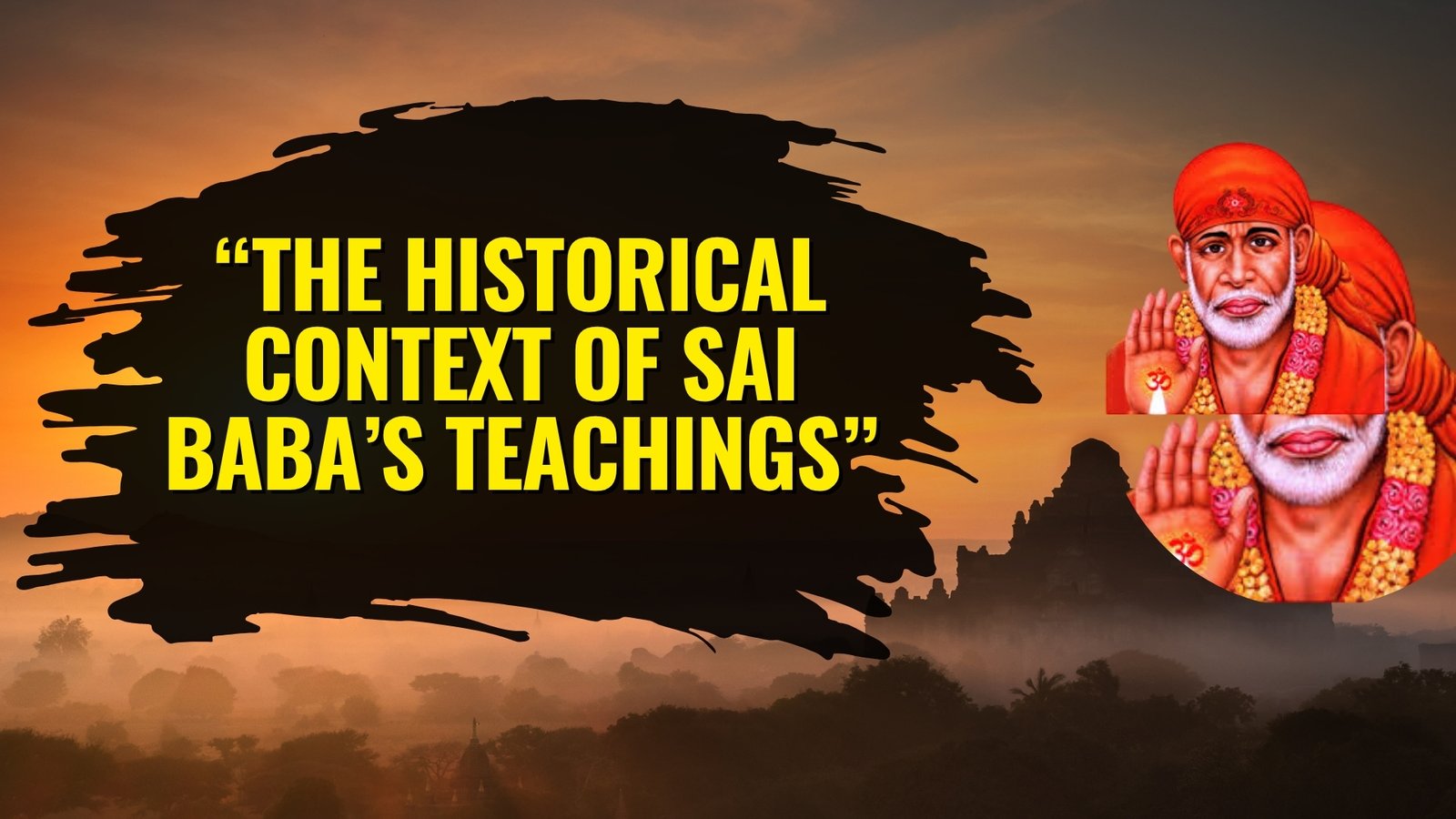
Sai Baba of Shirdi, a revered spiritual master, is one of the most iconic figures in Indian spirituality. His teachings, which transcend religion, caste, and culture, continue to inspire millions worldwide. Understanding Sai Baba’s philosophy requires looking at the historical and cultural backdrop of 19th-century India, a time of social, religious, and economic change. This exploration provides insight into why his messages of love, service, and faith remain timeless.
🌿 India in the 19th Century: Social and Religious Landscape
Sai Baba lived in Shirdi, a small village in Maharashtra, during the late 19th and early 20th centuries—a period marked by significant upheaval. India was under British colonial rule, which brought both modernization and social tension.
Religiously, the era was defined by a rigid caste system and strict adherence to rituals. Hindu and Muslim communities often remained socially segregated, yet both faced common challenges of poverty, illiteracy, and disease. It was within this environment that Sai Baba emerged, transcending societal divisions with his message of universal love and devotion.
🌸 Sai Baba’s Approach: Unity Beyond Religion
Sai Baba’s teachings were remarkable for their inclusivity. Despite being born in a Hindu or possibly Muslim family (accounts vary), he chose to live as a saint detached from religious labels. His famous saying, “Sabka Malik Ek” (One God governs all), reflects his core belief in the unity of all faiths.
This approach was particularly radical in a time when religious identity often dictated social interactions. By embracing both Hindu and Muslim practices—observing Ram Navami, celebrating Eid, and wearing a kafni robe—Sai Baba demonstrated that spiritual truth transcends ritualistic boundaries.
🧘 Core Teachings Rooted in Historical Reality
Sai Baba’s lessons addressed the immediate concerns of his devotees while remaining spiritually profound:
- Faith and Patience (Shraddha and Saburi): In an era of social and economic uncertainty, Sai Baba emphasized patience and unwavering faith as tools to navigate life’s challenges.
- Charity and Service: The 19th-century rural population faced poverty and hardship. Baba’s insistence on helping the needy, feeding the hungry, and providing shelter reflected both compassion and practical support for his community.
- Simplicity and Detachment: At a time when social hierarchies and material wealth defined status, Sai Baba lived simply, encouraging followers to focus on inner growth rather than worldly possessions.
These teachings were not abstract; they offered a practical framework for living a moral, compassionate, and resilient life.
🌟 Sai Baba’s Methods: Miracles as Social Instruments
Stories of Sai Baba’s miracles, such as healing the sick, calming storms, or providing food, were not only spiritual acts but also social interventions. In a period lacking widespread medical care and social welfare, these miracles provided hope and reinforced moral and ethical teachings.
For example, Sai Baba’s insistence on feeding visitors through the communal “langar” system blurred caste lines and provided a model for equality and community support.
📜 Preservation and Dissemination of Teachings
Much of what we know about Sai Baba comes from the “Shri Sai Satcharitra”, written by Hemadpant (Govind Raghunath Dabholkar) in the early 20th century. This text recorded not only the miracles but also the philosophical dialogues between Sai Baba and his devotees. It reflects the historical context of the time—social customs, daily life in rural Maharashtra, and the spiritual needs of a diverse community.
By preserving these teachings in writing, Sai Baba’s philosophy was able to transcend time and geography, reaching devotees far beyond Shirdi.
✨ Conclusion
Sai Baba’s teachings are not just spiritual ideals; they are a response to the social, religious, and economic realities of 19th-century India. By understanding the historical context, we appreciate the depth of his philosophy and the radical simplicity of his approach. Sai Baba showed that faith, patience, and service can transform lives, regardless of time or place.
Discover the timeless wisdom of Sai Baba. Visit Shirdi, explore devotional literature, or incorporate his teachings into your daily life to experience spiritual growth and inner peace.