Introduction
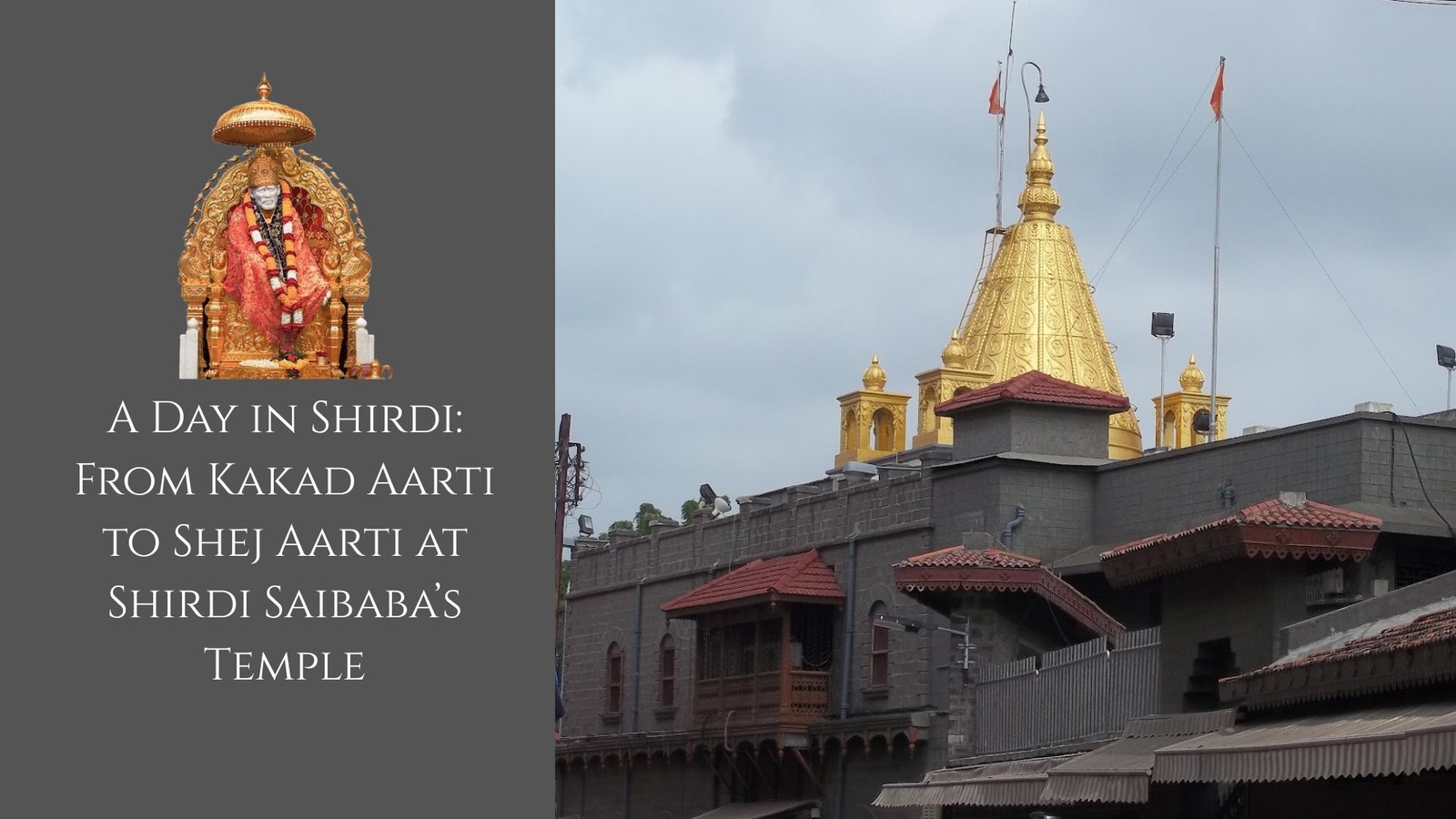
Imagine stepping into the stillness of dawn as you walk towards the golden spire of the Shirdi temple devoted to Sai Baba of Shirdi. The air is cool, the sound of bells faint, and you feel drawn into a space where faith meets ritual, where every moment feels charged with meaning. For devotees of Sai Baba, visiting this sacred place is not simply a tourist trip—it is a pilgrimage of the heart. In these hours—from the early-morning Kakad Aarti to the late-night Shej Aarti—you don’t just observe rituals, you live them. In this post I share a deeply personal take on a day in Shirdi, and interweave practical insight, fresh perspective and genuine reverence for the experience.
Why Shirdi?
To appreciate the day, it helps to understand the backdrop. Sai Baba (c.1838–1918) is revered as a saint who transcended religious boundaries, teaching love, forgiveness, service and inner peace.
The temple complex in Shirdi—officially managed by the Shree Saibaba Sansthan Trust, Shirdi—draws tens of thousands of devotees daily. Amid this flow, there is calm, ritual, and a chance to tap into something timeless.
The Day Begins: Kakad Aarti (Early Morning)
The moment of awakening
I arrived before 5 a.m., as the dawn light began to touch the temple dome. According to the official schedule, the temple opens at 4:45 a.m., with the Kakad Aarti starting around 5:15 a.m. in the main shrine.
Walking into the corridor I noticed the shifting hues—from deep blue to pale orange—as lamps were lit and chanting began. The Kakad Aarti isn’t just a ritual—it’s the temple “waking up” with you. The sound of bells, the scent of incense, and the slow pacing of devotees all merge into a gentle dance of devotion.
What it felt like
- There were fewer crowds at this hour, so the queue was manageable and the atmosphere hushed.
- You could observe the priests moving with precision and care—offering incense, waving lamps, chanting.
- The sense of faith is palpable: you witness people arriving barefoot in pre-dawn darkness, seeking darshan of Sai Baba.
Tips to make it richer
- Arrive 30–45 minutes before the scheduled start to find a good vantage.
- Dress modestly and wear slip-on shoes (you’ll be asked to remove footwear).
- Hold back from photography during the Aarti (some parts may restrict it) and instead absorb the moment.
- Take a few deep breaths and simply let the sound of the Aarti settle in your heart.
Midday and Afternoon: Beyond the Aarti
After the Kakad Aarti, I stepped out into the grounds of the temple. The complex houses several spots associated with Sai Baba — for instance, the old mosque-turned-dwelling known as Dwarkamai, and the garden called Lendi Baug where he used to walk.
The idea of faith in motion
When you visit midday, you begin to sense that faith here is not static: it moves through the queues for darshan, through the free meal service (prasadalaya) offered by the trust, through the mix of people from different regions, backgrounds, even religions. Sai Baba’s crowning principle was “Shraddha” (faith) and “Saburi” (patience) — and you see that lived here.
My personal insight
As I sat under a neem tree in the garden, watching devotees chat softly and children play nearby, I realized: visiting Shirdi isn’t just about seeing the temple—it’s about experiencing the ripple of devotion in everyday life. The midday lull becomes just as meaningful as the Aarti itself: you glimpse what happens between rituals.
Evening to Night: Dhoop Aarti to Shej Aarti
Dhoop Aarti (Evening)
As dusk falls, the Dhoop Aarti brings another wave of energy. Many guides list this at about sunset (~6:30 p.m.). While I didn’t stand in the full crowd this time, I witnessed the golden glow of lamps inside the sanctum, and the rush of devotees arriving after their daytime work to join the ritual. The atmosphere is slightly more vibrant than early morning, but still deeply reverential.
Shej Aarti (Night)
The final Aarti of the day—Shej Aarti—is when the temple settles down for the night. Some schedules put it around 10:30 p.m. onward. Being present for Shej Aarti felt like witnessing a day’s spiritual arc come full circle: from the pure light of dawn, through the bustle of afternoon, to the restful hush of night.
My reflections during Shej
As I waited, I noticed:
- Many devotees remained after the aarti, sitting quietly in the corridor, as if reluctant to leave the energy of the place.
- The lamps taken out, the soft chants fading, yet a residual hum of peace remained.
- I felt that faith, at this hour, becomes intimate and reflective—not loud, but deeply internal.
Unique Perspectives & Insights
1. Faith beyond ritual
Often one might associate visiting Shirdi just with ticking off the temple on a to-do list. But when you pace your day from Kakad to Shej, you realise the ritual is context not the end. Faith here is lived in the intervals between Aartis—the commutes, the waiting, the mundane steps of taking darshan, offering a flower, leaving with gratitude.
2. Observing contrast: Dawn vs Night
The transition from dawn to night in one complex is powerful. The Kakad Aarti invites hope, renewal—“a new day in God’s presence”. The Shej Aarti invites surrender, rest, reflection. By staying for both you feel the full cycle of devotion.
3. The personal versus the universal
In Shirdi you’ll see devotees from all over India (and beyond) with different languages, traditions, dress codes—but all drawn by Sai Baba’s message of unity. This subtle universality makes the whole pilgrimage richer: you feel part of something bigger, yet deeply personal.
4. Slowing down to really connect
I found the richest moments were when I did nothing—sat quietly in Lendi Baug, listened to chants, watched the evening light fade. That pause between the busy darshan lines is where the temple becomes your inner space, not just a place you visited.
Practical Tips for the Visit
- Arrive early: if you aim for Kakad Aarti, be there by 4:30 a.m. to avoid long queues.
- Dress modestly: temple security is strict—no shoes inside sanctum, and modest attire is expected.
- Stay hydrated, pack a light snack, especially if you plan to linger between rituals.
- Respect photo-rules: during Aartis you may be asked to refrain from photography.
- Book accommodation close by: arriving the previous night helps for the early start.
- Don’t rush: allow time to just sit in the temple garden or corridor and feel the atmosphere.
- Mind peak hours: Early morning and night are best for fewer crowds; midday is bustling but meaningful.
Conclusion
A day in Shirdi—from the quiet promise of the Kakad Aarti to the peaceful closure of the Shej Aarti—is more than just a travel itinerary. It is an immersive journey into the heart of faith, ritual and self-reflection. Whether you are a devotee of Sai Baba, spiritually curious, or simply seeking a meaningful pause in life, visiting Shirdi offers a rare blend of stillness and shared devotion.
If this article resonated with you, I encourage you to share your own experiences: Have you visited Shirdi? What moved you the most—early dawn, the bustle of darshan lines, or the night ritual? If you haven’t been yet, consider planning your own visit: mark the Kakad and Shej Aarti slots in your mind, stay open to what happens in between, and you may be surprised how deeply the experience stays with you.
And while you’re here on the blog, feel free to explore our other posts on pilgrimage sites, travel-spirituality blends, and how faith journeys can enrich everyday life. Let me know in the comments below what you would like to read next—perhaps tips for accommodation in Shirdi, or how to combine Shirdi with other spiritual destinations.
Jai Sai Ram!